Happy Summer!
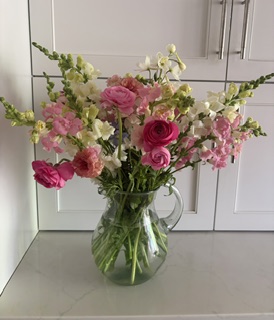 It’s always fun to travel with a read that’s rich enough to keep you engaged but okay to put down for a night or two as you stay out too late celebrating a graduation or an engagement or a wedding. It’s that time of year.
In that vein, I’m delighted to recommend Rachel Hochhauser’s Lady Tremaine, a smart feminist retelling of the Cinderella story, narrated by the “evil” stepmother. It’s funny (Elin, a stand in for Cinderella, is a pompous bore who won’t or can’t help out in the crumbling castle they all live in.) The stepsisters are talented and sympathetic. The stepmother’s back story makes her marriage to Elin’s father understandable. We  know Cinderella as a fairy tale; Hochhauser’s story is dark and rich and satisfying. It’s both a nod to the original and its own thing.
Again in travel mode, I picked up Jojo Moyes We All Live Here in an airport convenience store, hour five of an  eight-hour flight delay. I am always happy in her hands. Lila, our main character, is grieving the loss of her mother and of her marriage. Ex husband Dan has taken up with Marja; they’re expecting a baby. Lila, a best selling author, is at home with two girls, a teenager and a nine year old. Helping is her mother’s husband Bill, who raised Lila. Enter Lila’s birth father, a lovable cad who gets under Bill’s skin. Add in a cute architect who’s playing with Lila’s affections and a sturdy landscaper caught up in the family drama. As always with Moyes, this is a read that’s funny and sad, smart and endearing.
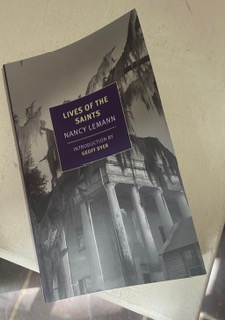 Recommended by my son Evan Dent (on Substack, Evan Reads) I picked up Nancy Lemann’s Lives of the Saints, originally published in 1985. Oh, youth! I loved this read, for its heartaches and truth telling. As with all great literature, we start with a wedding. “All in all, Henry Laines’ wedding was one of the worst events in my experience, tragic in society.” As Geoff Dyer wrote in its introduction, this is “cocktail-and-heat-soaked New Orleans.” Others have described this read as “bonkers.” I see it as a young woman’s coming of age, in the late 1970s, observing and moving among her childhood home and its people.
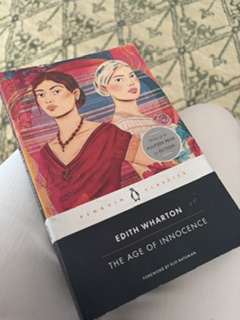 Sure, you’ve seen the movie. Have you read the book since high school? Edith Wharton’s Age of Innocence. Wow. Just — wow. Our narrator, Newland Archer may be her finest creation. He’s engaged to a New York beauty, May Welland, who’s not dumb but a little vapid. Enter her cousin, Countess Ellen Olenska, a divorcee who has come to New York to secure funds from a grandmother. Ellen uses Newland as an ally; Newland thinks she’s in love with him. Where so many readers (and filmmakers) see a tragic love story, I read it as the story of a self involved man who fails to act. Or is he trapped by May and their children? Wharton paints a delicious portrait of New York society during the Gilded Age. Read it for the first time, or read it again.
Finally, I’m just starting Ann Patchett’s Whistler. It’s just right.
.