Greetings! I’m just returned from Lac Pythonga. Three weeks in my favorite get away and my favorite place to read.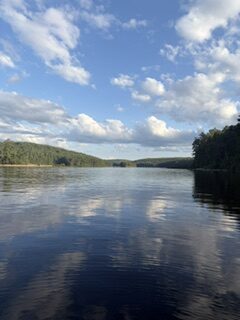
As a reminder, I only review books I can recommend. They tend to be those that are newly published or stand up over time.
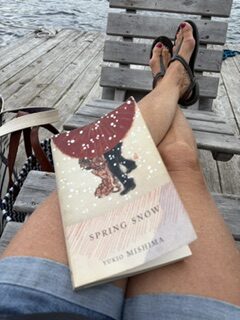 Spring Snow, by Yukio Mishima was published in 1968. It’s set in 1912, in Tokyo, among aristocrats and the newly wealthy. There, we meet student friends Shigekuni and Kiyoaki, who is both in and out of love with the slightly older aristocratic girl, Satoko.
Mishima’s prose is lush and atmospheric; this old world is beautifully drawn.
As Kiyo dithers, Satoko is engaged to a member of the imperial family, a royal prince. With that, Kiyo acts, and the two embark on a secret romance that forms the core of the book. Pregnant, Satoko is taken to Osaka for an illegal abortion. After that, there’s a surprising twist: Satoko checks into a nunnery, and never leaves, despite Kiyo’s desperate pleas. Taking herself out of society felt like the only act Satoko could make on her own; everything else in her life had been planned by parents and suitors.
Mishima is one of Japan’s greatest writers. This book is the first in a four-part series linked by reincarnation.
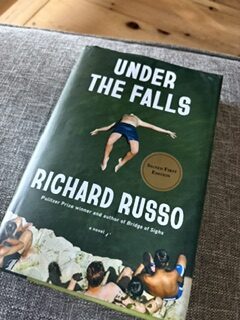 Under the Falls, by Richard Russo is a newly published work by the bard of faded mill-town New York. Remember his masterpiece, Empire Falls? It’s one of my favorites, a big messy doorstopper of a book. Under the Falls is more tightly told and far more violent than Russo’s earlier works.
Rock star Tyler Sinclair returns to his faded hometown for a concert to benefit his friend Doc, paralyzed in a diving accident when the two were kids. The concert turns ugly; the fans know that Tyler has used their region’s misfortune in song, making a fortune. Leaving town, Tyler’s limousine is run off the road, killing two and leaving Tyler badly injured.
Who wants Tyler dead? Oh, my, the tangled web of small towns. This is a brisk read fashioned, Russo adds in an end note, from an unproduced screenplay.
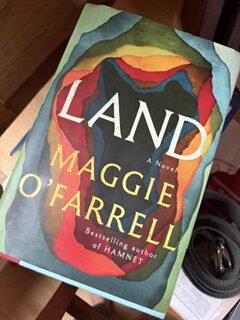 The Land, by Maggie O’Farrell, see above, my love of oversized books. This one clocks in at 400 pages, but feels longer. It’s set in Ireland, after the Great Famine (1845 -1852), which killed a million people in a country of eight million. O’Farrell is best known for writing Hamnet, the story of young William Shakespeare, which went on to be a play and a movie.
Teenage orphans Tomas and Seraphina escape the workhouse for Dublin, and start a family. A cartographer, Tomas is employed by the British to map the land. One day, Tomas walks into a copse and is forever changed by its strange powers.
Tomas commits himself to the land near the copse. As their children grow into adults we follow son Liam into the priesthood. Daughter Enda leaves for Canada, where she’s fooled in love and barely survives by cleaning hotel rooms. Rose and brother Eugene follow, but Eugene jumps ship and swims to shore, making his way back to the house and its copse.
There’s so much to love in this read and what I’ve mentioned is a bare outline. I was fully invested in this family’s fate.